For five years, Hillsboro Village was not somewhere I visited when I wanted a taste of Nashville. It was home.
Living there gave me a much different view of the city than the one most visitors experience. Nashville is often presented through the neon lights of Broadway, the Grand Ole Opry, packed concert venues and the nonstop energy of downtown. Hillsboro Village had some of that same creative pulse, but it moved at a more human pace.
It sat between Vanderbilt and Belmont, close enough to downtown to stay connected to the center of the city, but far enough away to avoid living inside the constant machinery of tourism. Students, longtime residents, young professionals, families, musicians and visitors all moved through the same few blocks. That mixture gave the neighborhood its character.
It never felt like it belonged to only one group.
It felt lived in.
I arrived during a period when Nashville was already growing quickly. New construction was everywhere. Restaurants, apartments and hotels continued to appear. Neighborhoods were changing, property values were climbing and the city’s national profile seemed to grow by the month.
Then COVID changed everything.
Nashville is a city built around people gathering together. Music venues, restaurants, bars, universities, sports, conventions and tourism all depend on crowds. When the pandemic arrived, the city became unusually quiet. Downtown emptied. Live music stopped. Restaurants struggled. Vanderbilt and Belmont felt different without their normal rhythm of students and activity.
Hillsboro Village became quieter too, but it never stopped feeling like a neighborhood.
People still walked their dogs. Residents still passed one another on the sidewalks. Local businesses adjusted however they could. The streets felt smaller and more personal. It was a strange period, but it revealed something important: Hillsboro Village was more than a collection of restaurants and storefronts. It was a real community.
Watching Nashville eventually come back to life made me appreciate the city in a completely different way. The crowds returned. The music returned. Restaurants filled back up. Construction resumed its relentless pace. Yet the memory of that quiet period never fully disappeared.
A Neighborhood Built Around Walking
One of the greatest advantages of living in Hillsboro Village was the ability to walk into the heart of the neighborhood.
That may sound ordinary, but in Nashville, it is not.
Much of the city requires a car. Hillsboro Village offered something different. Coffee, breakfast, restaurants, shops and entertainment were all concentrated around 21st Avenue South. I could leave home without turning every outing into a drive across town.
That walkability gave the neighborhood a sense of routine.
The Pancake Pantry was impossible to separate from the identity of Hillsboro Village. The line outside became part of the scenery, especially on weekends. Visitors treated it like a destination. Locals learned when to go and when to keep walking.
Even when I was not eating there, seeing the crowd outside made the Village feel connected to an older version of Nashville.
Fido had a different personality. It felt like a coffeehouse, restaurant, workplace and neighborhood gathering room all at once. Students sat with laptops. Friends met for breakfast. Business conversations unfolded over coffee. Musicians and creative people blended into the room without needing to announce who they were.
Places such as Double Dogs, Pizza Perfect and The Villager Tavern added their own character. Some were polished. Others were anything but polished. Together, they created a neighborhood that felt varied without feeling manufactured.
That was one of Hillsboro Village’s strongest qualities. It had enough activity to remain interesting, but it was still compact enough for places to become familiar.
You began to recognize the storefronts, the sidewalks and the normal flow of the day.
The Belcourt and the Other Side of Nashville
The Belcourt Theatre gave Hillsboro Village something few neighborhoods have: a genuine cultural anchor.
It was not simply another movie theater. It represented independent film, classic cinema, documentaries, special events and a more artistic side of Nashville. On any given night, the crowd might include students, professors, filmmakers, musicians, retirees and people who simply loved movies.
That mix reflected the neighborhood itself.
Nashville’s public image is often reduced to cowboy boots, bachelorette parties, honky-tonks and country music. Those things are certainly part of the city, but they are not the entire story.
Living near the Belcourt made it easy to experience Nashville as a broader creative community.
The same was true of Vanderbilt and Belmont. The universities constantly brought new people, new ideas and new energy into the area. The neighborhood changed with the academic calendar. Summers felt quieter. Fall brought the sidewalks back to life. Graduation weekends transformed the area.
There was always movement, but it was not driven entirely by tourists. Much of it came from the natural rhythm of people studying, working and living nearby.
The Friends Who Made Nashville Feel Like Home
As much as Hillsboro Village shaped my experience in Nashville, the people I met across the city made those five years memorable.
Some of those friendships grew through playing kickball and flag football in Nashville’s recreational sports leagues. What started as a way to stay active and compete quickly became a much bigger part of my life in the city.
Weeknight games gave me a routine outside of work. They introduced me to people from different backgrounds and different parts of Nashville. They created the kind of camaraderie that is hard to manufacture.
Kickball brought a more relaxed and social energy. It was competitive enough that everyone wanted to win, but casual enough that the games created instant connections. Flag football was different. It was faster, more physical and more intense. It brought real strategy, bigger personalities and the kind of team chemistry that only develops after playing together week after week.
Both created memories that extended far beyond the field.
There were close games, bad calls, big plays, inside jokes and plenty of time spent together before and after the final whistle. Teammates became friends. Those friendships helped me experience Nashville beyond one neighborhood and beyond the version of the city most people see.
The leagues gave me more than recreation. They gave me community.
That mattered.
A city can have great restaurants, live music and beautiful neighborhoods, but it is the people who determine whether it ever truly feels like home. The friendships I made through those games became part of my Nashville story and part of what made those five years so meaningful.
Watching Nashville Change
During those five years, Nashville did not simply grow. It transformed.
New businesses arrived. Older buildings were renovated or replaced. More apartments and hotels appeared. Neighborhoods that once felt separate began blending into one rapidly expanding city.
Some of that growth was exciting.
There were more restaurants, more entertainment options and more investment. Nashville became more ambitious and more confident. It increasingly felt like a city determined to compete on a national level.
But growth always comes with tradeoffs.
The Nashville I knew at the end of those five years did not feel exactly like the one I knew at the beginning. It became busier, more expensive and more corporate. Some of the city’s rougher edges were polished away. Places that once felt spontaneous began to feel carefully designed.
Hillsboro Village was not immune to that change, but it handled it better than many parts of Nashville.
Its historic buildings, established businesses, residential streets, universities and cultural institutions gave it an identity strong enough to survive the city’s growth. The Village changed, but it never completely lost itself.
That does not mean every change was positive.
It means the neighborhood still felt recognizable.
Close to Everything Without Being Consumed by It
Location was one of the biggest advantages of living in Hillsboro Village.
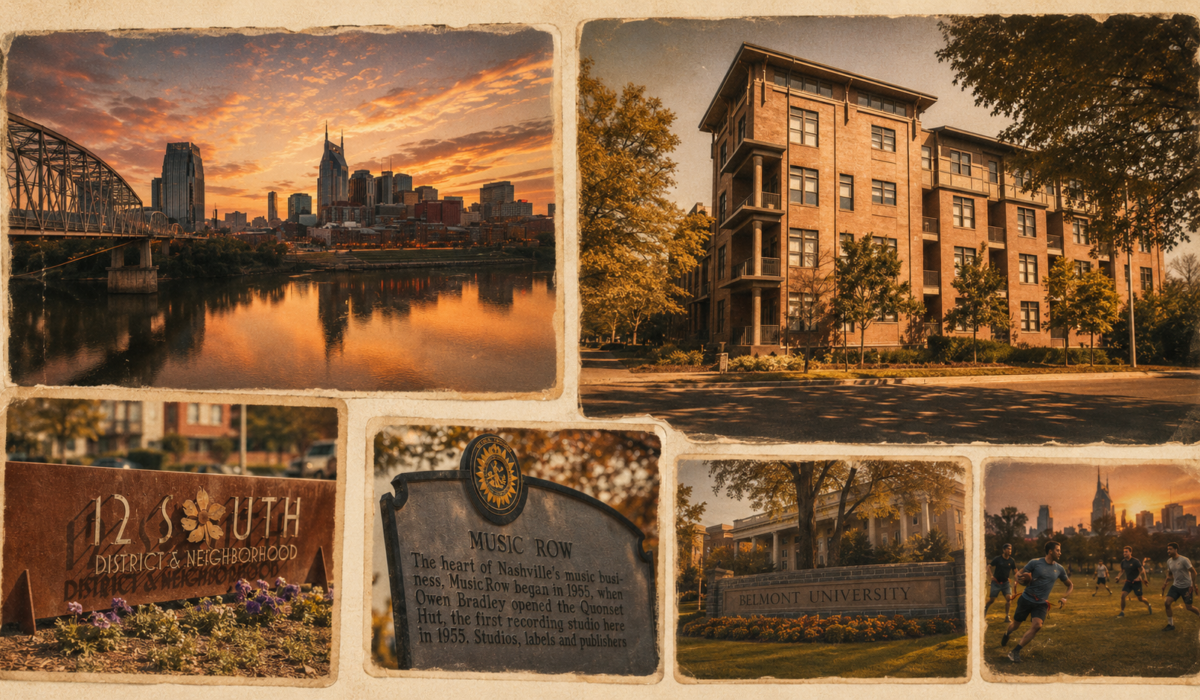
Downtown was close. Midtown, West End, Green Hills, Belmont, 12 South and Music Row were all within easy reach. I could attend a concert, a Predators game, a dinner downtown or an event near Broadway and still return home to a completely different atmosphere.
That distinction became more valuable as Nashville’s tourism economy expanded.
I could experience Broadway without living on Broadway.
I could enjoy the energy of the city without being surrounded by it every night.
Instead of ending the evening among neon lights, pedal taverns and packed sidewalks, I could return to tree-lined streets, older homes, university buildings and people walking back from dinner.
Hillsboro Village offered access without total immersion.
For someone actually living in Nashville, that mattered.
The Nashville People Do Not Always See
The Nashville most people know is built around landmarks.
The Grand Ole Opry. The Country Music Hall of Fame. Broadway. The Ryman Auditorium. RCA Studio B. The arenas, museums, restaurants and live-music venues that helped make the city famous.
Those places matter. They tell Nashville’s story on a national scale.
But living in Hillsboro Village taught me that a city is also defined by smaller, repeated moments.
It was walking past the line at Pancake Pantry on a weekend morning.
It was seeing students move between coffee shops with backpacks and headphones.
It was noticing when a storefront changed.
It was going to the Belcourt on an ordinary weeknight.
It was heading to a kickball or flag football game and knowing the evening would be about more than the final score.
It was laughing with teammates, competing hard and building friendships that made the city feel smaller.
It was watching the neighborhood grow quiet during COVID and slowly come back to life.
It was hearing the city return after months of uncertainty.
It was being close enough to feel Nashville’s momentum while still living in a place that functioned as a community.
That was the Nashville I experienced.
What Those Five Years Meant to Me
Hillsboro Village gave me a front-row seat to one of the most unusual and consequential periods in Nashville’s recent history.
I watched a booming city shut down.
I watched it recover.
I watched live music return, restaurants reopen, tourism surge back and development accelerate. I saw Nashville become more confident, more ambitious and, at times, more complicated.
Through all of it, Hillsboro Village remained my base.
It was familiar without feeling stagnant. Energetic without becoming exhausting. Historic without being trapped in the past. It allowed me to experience Nashville as both a major destination and a collection of everyday routines.
The neighborhood gave me a place to come home to. The city gave me experiences. The people I met gave those experiences meaning.
Five years was long enough for Hillsboro Village to become more than an address.
It became a chapter of my life tied to a specific place, a remarkable period, lasting friendships and a city changing in real time.
When I think about living in Nashville, I do not first picture the skyline or the lights of Broadway.
I picture 21st Avenue.
I picture the Village.
I picture the fields, the games and the friends I met along the way.
And I remember what it felt like to call Nashville home.